Product Introduction
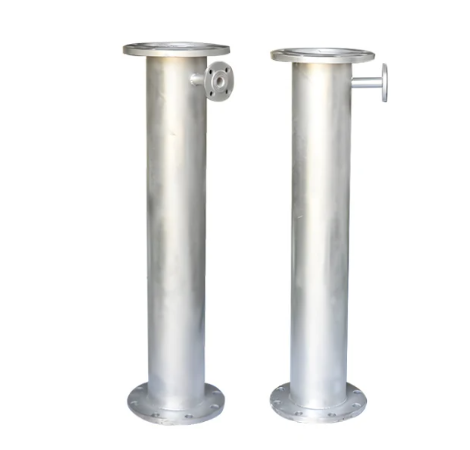
Static pipeline mixer is a non powered device that achieves fluid mixing through a special structure mixing unit fixed inside the pipeline. It mainly consists of a pipeline shell, multiple sets of series connected mixing unit bodies, and connecting flanges. Its working principle is that when the fluid flows through the mixing unit, it will be continuously divided, sheared, rotated, and re converged, generating strong turbulence and shear effects, thus achieving uniform mixing of different fluids in a very short time without external power drive. According to the different structural forms of the internal mixing unit, it can be divided into various types such as SK type (spiral blade type), SV type (corrugated plate type), SX type (cross hole plate type), SL type (double spiral type), etc. The pipe diameter range covers DN15 to DN2000, which can meet the needs of different flow rates and mixing accuracies.
Process Selection
1. Select according to the type of mixed medium: SV or SX mixers are preferred for liquid-liquid low viscosity fluid mixing; SK type mixer is suitable for gas-liquid mixing and solid-liquid mixing with a small amount of solid particles; SL type mixer should be used for mixing high viscosity fluids or viscous slurries.
2. Select according to the mixing accuracy requirements: SV type mixer is required for high-precision mixing (such as disinfectant addition, trace drug mixing); SK type mixer is selected for general precision mixing (such as coagulant addition and pH adjustment); The SX type mixer with a simpler structure can be used for mixing with high flow rates and low requirements.
3. Selection based on fluid flow rate and velocity: The fluid flow rate in the mixer should be controlled between 0.8-1.5m/s. A low flow rate can lead to a decrease in mixing efficiency, while a high flow rate can increase pipeline resistance and energy consumption. The mixer should be matched with the corresponding pipe diameter according to the design flow rate.
4. Selection based on working conditions: Stainless steel or fiberglass materials are selected for corrosive media environments; Choose carbon steel or stainless steel materials for high temperature and high pressure working conditions and carry out pressure resistance design; The food and pharmaceutical industry requires the use of 304/316L stainless steel materials that meet hygiene standards.
Equipment Selection
1. Determine core parameters: Calculate and select the matching mixer pipe diameter based on the maximum design flow rate and recommended flow rate, ensuring that the flow rate inside the pipeline is within the range of 0.8-1.5m/s; Determine the number of mixing units based on the difficulty and requirements of mixing. For conventional water treatment dosing mixing, 3-6 mixing units can be selected to meet the requirements.
2. Select the type of mixing unit: Based on the type of mixing medium, viscosity, and mixing accuracy requirements, choose SK, SV, SX, or SL type mixing units. For complex working conditions, different types of unit combinations can be used to optimize the mixing effect.
3. Determine equipment material: Select appropriate shell and mixing unit materials based on the corrosiveness, temperature, pressure, and industry hygiene requirements of the medium. Carbon steel lining or 304 stainless steel can be used for conventional water treatment conditions, while 316L stainless steel or fiberglass can be used for strong corrosion conditions.
4. Clarify the connection and installation method: The standard connection method is flange connection, and threaded connection or welded connection can be customized according to the requirements of the pipeline system; During installation, a straight pipe section of no less than 5 times the diameter of the pipe should be reserved before and after the mixer to ensure stable flow before the fluid enters the mixer.
5. Configure auxiliary interfaces: According to process requirements, configure auxiliary interfaces such as drug feeding port, pressure gauge interface, sampling port, and sewage outlet; For situations where online monitoring of mixing effects is required, installation positions for instruments such as pH meters and turbidity meters can be reserved.
6. Compliance with standard requirements: The equipment should comply with HG/T 20570.20-1995 "Design Specification for Static Mixers" and relevant industry standards to ensure product quality and safe use.




 CN
CN

 National Service Hotline:400-611-6861


