CN

Product Center

Green Innovation · Scientific and Technological Development · Industrial Responsibility · Joint Construction of Civilized Ecology

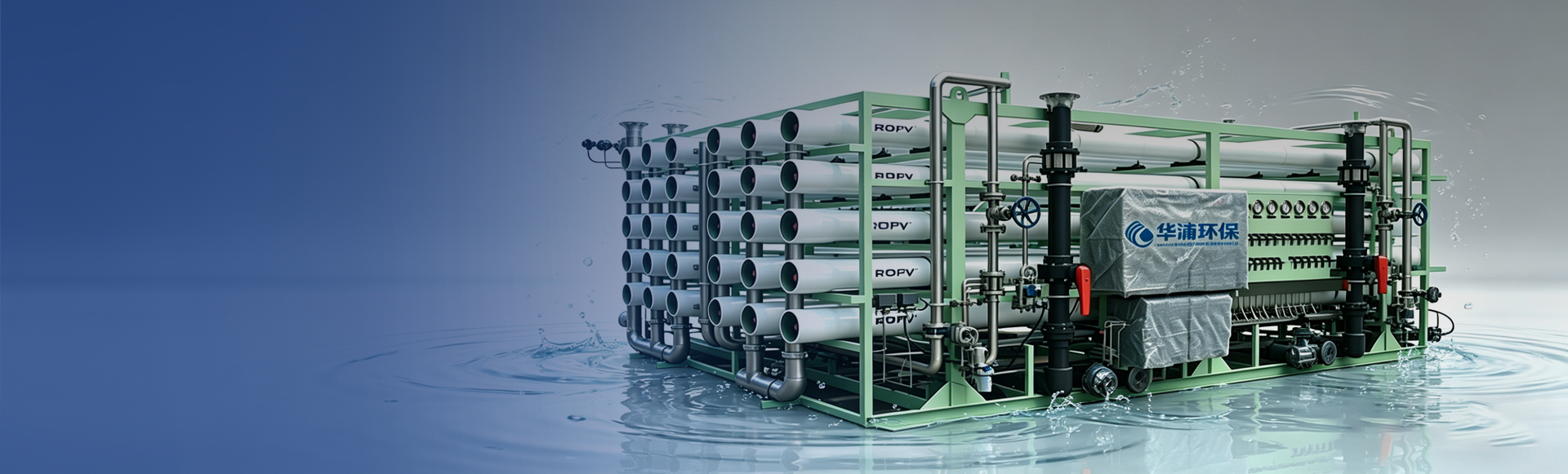
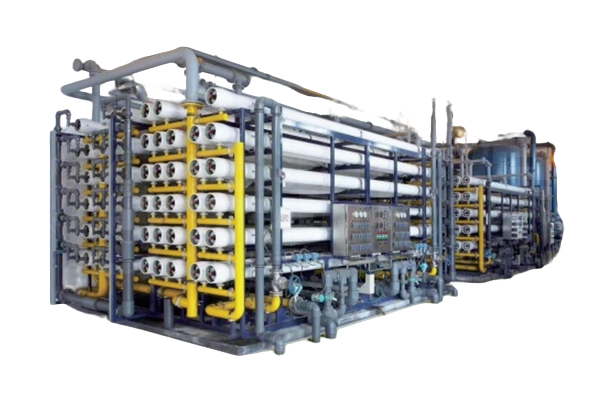
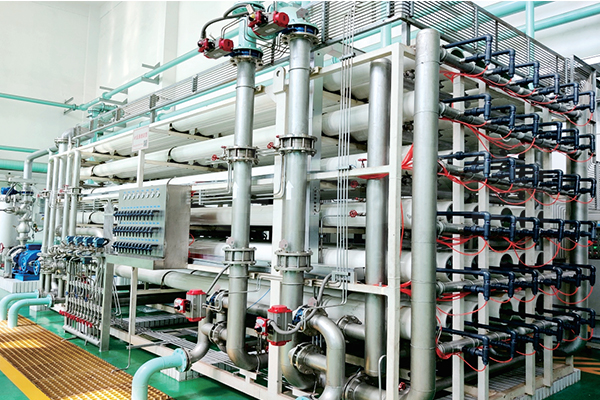
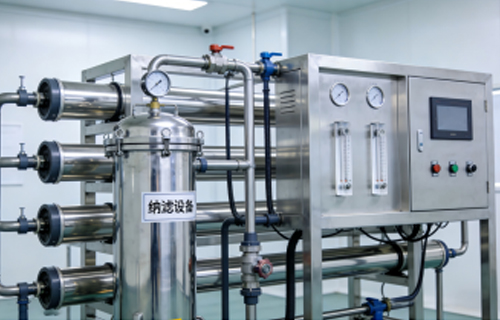
Nanofiltration Equipment

Purification of drinking water, softening of water quality, removal of organic matter from surface water, and decolorization of pigments; Reduce hardness and partially dissolve salts; Removal of harmful substances from pipeline direct drinking water; Remove organic matter, carcinogenic substances, natural organic matter, and synthetic organic pesticides from water; Removal of disinfection by-products and volatile substances; Reuse of reclaimed water and upgrading of wastewater treatment at the backend.

National Service Hotline:400-611-6861
Product Introduction

Nanofiltration is a green water treatment technology and the latest development in membrane separation technology internationally. Its separation performance is between reverse osmosis and ultrafiltration, allowing some inorganic salts and certain ions to pass through the membrane, effectively retaining ions beneficial to the human body in the water, thus achieving the separation effect.

Nanofiltration membranes have a wide range of tolerance conditions, high concentration ratios, and strong pollution resistance; Low operating pressure, high membrane flux, low operating costs of the device, and extremely low energy consumption. Can operate under harsh conditions such as high temperature, acid, alkali, etc.

Technical Advantage
Fine filtration demineralization
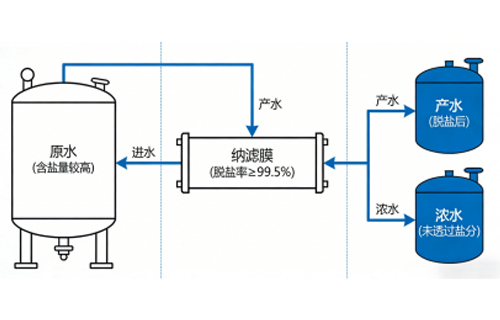
Desalination rate ≥ 99.5%, efficient demineralization, heavy metals, etc., and the effluent can be directly drinking.
Energy Saving
Variable-frequency high-pressure pump+energy recovery unit, energy consumption reduced by 10% - 20%.
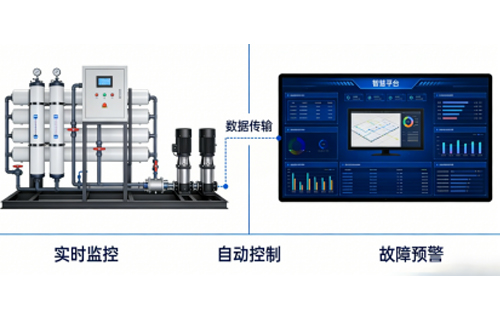
Intelligent early warning
It integrates membrane pollution monitoring and pressure warning and connects with intelligent platform to realize unattended operation.
High tolerance
Strong pollution resistance and can operate under harsh conditions such as high temperature, acid, alkali, etc.
Working Principle

image.png

Process Selection

Application Scenario

Objective

Key Requirements

Drinking Water SofteningRemove hardness ions (Ca²⁺, Mg²⁺), retain some mineralsHigh rejection of divalent ions, low rejection of monovalent ions
Salt Separation / Salt PurificationSeparate Na₂SO₄ and NaClRequire specific selectivity (e.g., >98% for SO₄²⁻,<50% for Cl⁻)
Organic Matter RemovalRemove pesticides, antibiotics, pigments, etc., retain some saltsSelect appropriate rejection rate based on organic molecular weight
Food ConcentrationConcentrate whey, sugar, etc.Low temperature, low fouling, retain flavor compounds
Wastewater ReuseRemove COD, hardness, partial desalinationFouling resistant, easy to clean
Equipment Selection

MgSO₄ retention rate: represents the ability to remove divalent ions (usually>95%).

CaCl₂ retention rate: represents the comprehensive removal of hardness and chloride ions.

NaCl retention rate: represents the removal of monovalent ions (usually 20% -80%, with significant differences among different models).

Flux: Unit area water production capacity (LMH), similar to RO.

PH tolerance range: 2-11 is usually required during cleaning and 3-10 during operation.