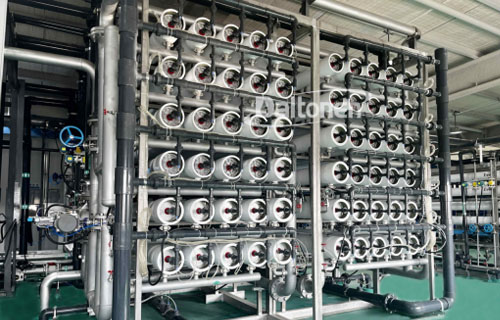
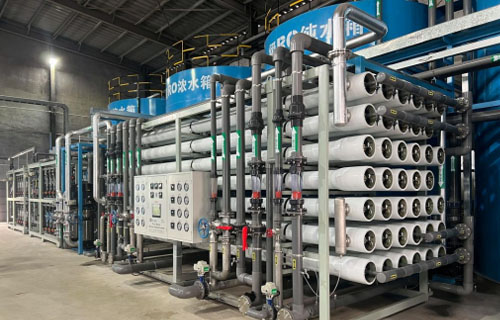
Product Introduction
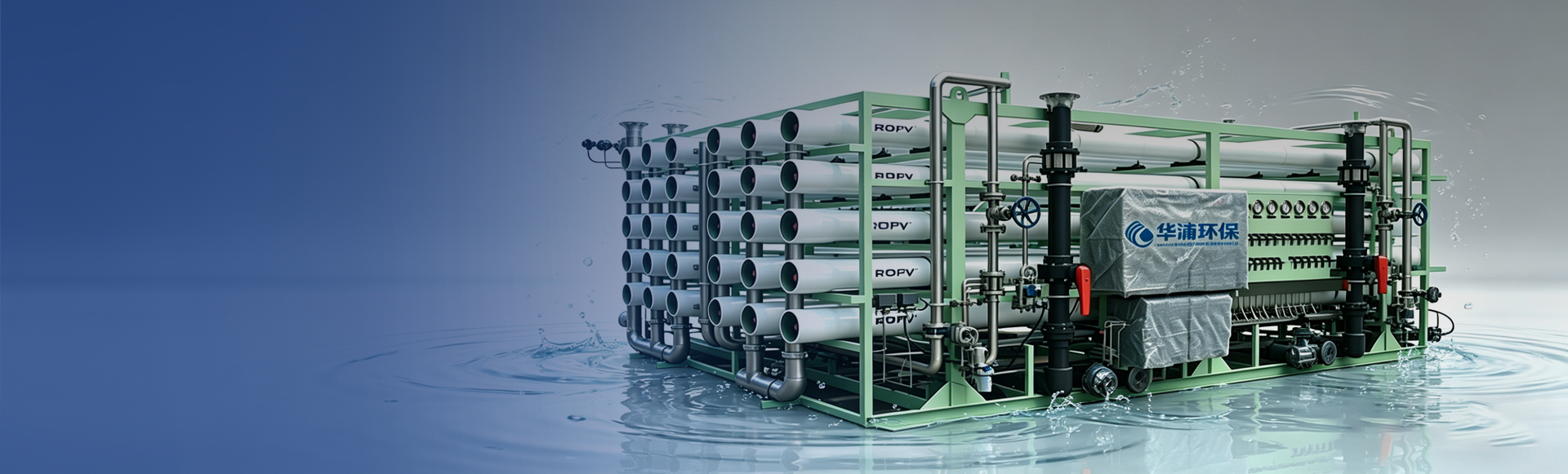
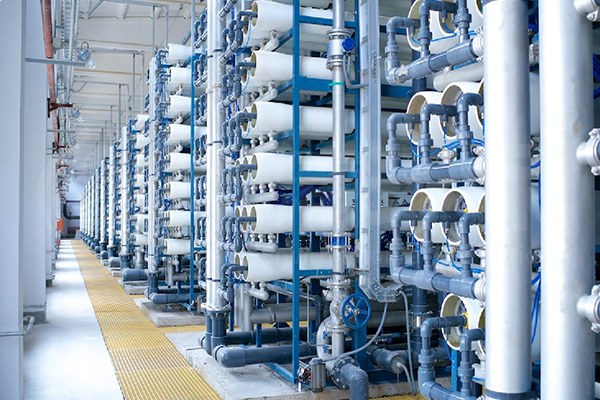
The RO membrane filtration device uses reverse osmosis membrane as the core separation unit, which achieves efficient separation of water molecules from dissolved salts, colloids, microorganisms, organic matter, heavy metals and other impurities under pressure, and the effluent quality is stable and meets the standard. The device adopts a modular integrated design, which can be matched with pre-treatment, dosing, cleaning, self-control and other systems. It has a high degree of automation, small footprint, reliable operation, and can meet the needs of different industries for pure water, purified water and deep water treatment.
Process Selection
1. Single stage RO process: suitable for conventional water quality scenarios such as pure water preparation, drinking water purification, and reclaimed water reuse.
2. Dual stage RO process: suitable for high-purity water treatment, boiler feedwater, medical water, and pre-treatment of ultrapure water in the electronics industry.
3. RO+concentrated water recovery process: suitable for wastewater reuse and zero discharge projects, improving water utilization efficiency.
4. Pre treatment+RO combination process: quartz sand/activated carbon/precision filtration+scale inhibition and dosing+RO, to deal with high turbidity, high hardness, and high pollution raw water.
5. RO+deep precision processing technology: RO+EDI/mixed bed/disinfection, meeting high demand scenarios such as ultrapure water and sterile pure water.
Equipment Selection
1. Selection of membrane components: Select bitter and salty water membranes, seawater desalination membranes, anti pollution membranes, and low-pressure and high desalination membranes based on water quality.
2. Pressure and scale selection: Determine the number of membrane shells, pump type, and system configuration based on water production rate, inlet pressure, and recovery rate.
3. Selection of pre-treatment equipment: multi-media filter, activated carbon filter, precision filter, self-cleaning filter, dosing and scale inhibition system.
4. Power and auxiliary selection: online monitoring instruments such as high-pressure pump, booster pump, cleaning tank, flow meter, pressure gauge, conductivity meter, etc.
5. Structure and control selection: integrated/pry mounted/split type; PLC fully automatic control can achieve automatic flushing, start stop, and fault alarm.




 CN
CN

 National Service Hotline:400-611-6861