CN

Product Center

Green Innovation · Scientific and Technological Development · Industrial Responsibility · Joint Construction of Civilized Ecology

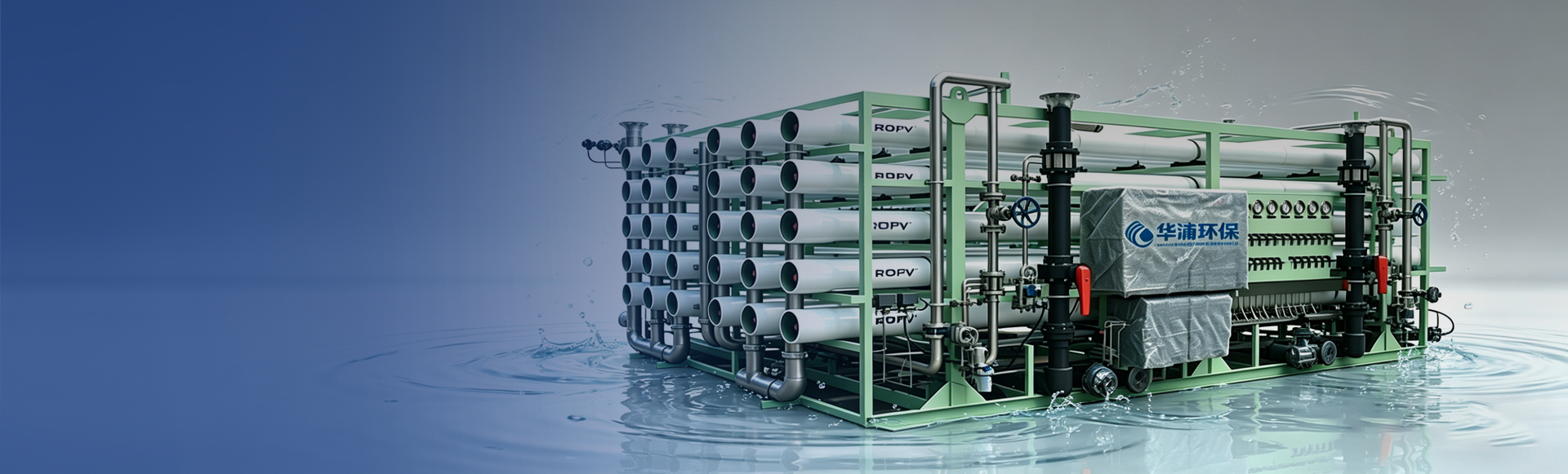
PYPRH series high-efficiency softening technology device

The PYPRH series high-efficiency softening technology device is mainly used in the field of deep treatment and resource utilization of industrial wastewater, including desulfurization wastewater from power plants, high salt wastewater from coal chemical industry, mine water treatment, circulating cooling water wastewater, steel wastewater, oilfield produced water, garbage leachate liquid film concentrate and other high hardness and high alkalinity industrial wastewater treatment, as well as wastewater de hardening reuse and zero discharge pretreatment in chemical, pharmaceutical, printing and dyeing industries. In the zero discharge project of industrial wastewater, as the core pretreatment process before RO membrane concentration, it efficiently removes scaling ions such as calcium, magnesium, silicon, and fluorine to ensure the stable operation of the subsequent membrane system, and can treat extremely hard water quality with a hardness of up to thousands of mg/L (calculated as CaCO3) in raw water. In addition, it can also be used to treat industrial wastewater with high turbidity, high suspended solids, and complex organic compounds.

National Service Hotline:400-611-6861
Product Introduction

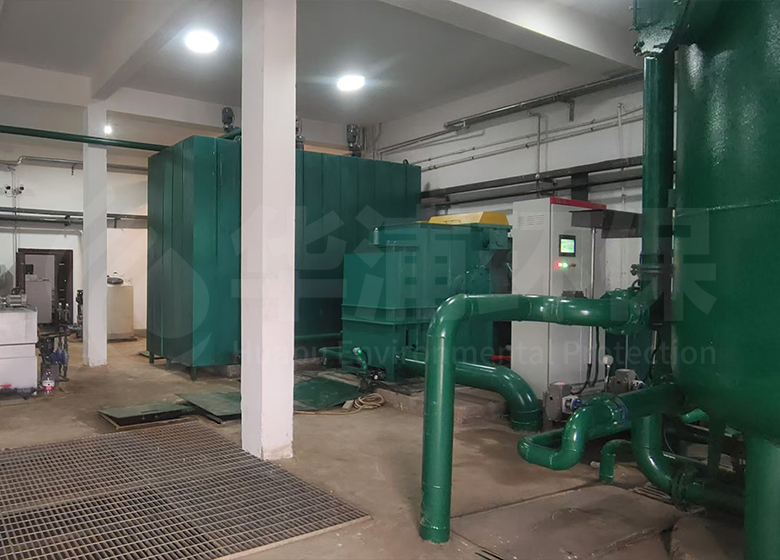
The core innovation of this device lies in the organic coupling of tubular membrane separation technology with traditional chemical softening processes, using PEK tubular membranes with high pollution resistance and strong alkali resistance as the core separation element, replacing sedimentation tanks and multi-media filters in traditional processes. The device mainly consists of a reaction system (softening reaction tank, reagent dosing system), a tubular membrane separation system (PEK alkali resistant tubular membrane components, circulating pump), a control system (PLC automatic control), and supporting auxiliary facilities.

Technical Advantage
Small footprint
By integrating multiple traditional processes such as sedimentation tanks, multi-media filters, and ultrafiltration into an integrated equipment, the footprint can be reduced by more than 50% under the same processing scale.
Stable and reliable operation
The tubular membrane adopts cross flow filtration method, with high flow velocity on the membrane surface, making it difficult for sludge to deposit and block on the membrane surface; Strong chemical tolerance, capable of frequent high-intensity chemical cleaning to restore flux, greatly improving system stability and impact resistance.
High degree of automation
The device adopts PLC fully automatic control, which can achieve automatic operation and remote monitoring of the entire process such as water inlet, dosing, membrane separation, backwashing, and sludge discharge, reducing manual intervention and ensuring stability and reliability.
Multi pollutant collaborative removal
By compounding softening agents, it is possible to simultaneously remove some silica and fluoride ions while efficiently removing hardness, achieving multi index collaborative compliance.
Process Selection

1. Selection based on raw water quality: For conventional water with hardness<300mg/L and turbidity<1000mg/L, a single-stage PYPRH softening device is selected; For medium to high hardness water with a hardness of 300-1000mg/L and a turbidity of 1000-10000mg/L, a two-stage PYPRH softening device is selected; Water with a hardness greater than 1000mg/L or high concentration of sulfate ions requires the addition of a lime pretreatment unit.

2. Selection according to effluent requirements: For conventional boiler feedwater and reverse osmosis pretreatment with effluent requirements of hardness<50mg/L and total silicon<20ppm, standard PYPRH devices are selected; High pressure boiler feedwater with a hardness requirement of less than 10mg/L is selected using the PYPRH+fine filtration combination process; The feed water for ultra-high pressure boilers with a hardness requirement of less than 0.03mmol/L is selected using the PYPRH+ion exchange combination process.

3. Selection based on processing scale: For small-scale projects with a daily processing capacity of less than 1000m ³, an integrated steel PYPRH device should be selected; For medium-sized projects with a daily processing capacity of 1000-10000m ³, modular combination PYPRH devices are selected; For large-scale projects with a daily processing capacity greater than 10000m ³, a combination design of multiple parallel reinforced concrete structures and membrane components is adopted.

4. Selection by application field: Boiler feedwater and circulating cooling water softening, using standard PYPRH devices; Reuse of mine water and industrial wastewater, using reinforced PYPRH equipment and equipped with sludge dewatering system; The food, beverage, and pharmaceutical industries use sanitary grade PYPRH devices made of 316L stainless steel material.


Equipment Selection

Parameter Description and Selection Points

The PYPRH series of products is a standardized product of the Prang membrane PRH process. It is divided into multiple models and specifications according to different processing scales and application scenarios. The specific selection needs to be customized by the supplier based on water quantity and quality parameters

The processing capacity of a single set of equipment varies from hundreds of tons/day to thousands of tons/day, and large-scale projects can adopt multiple parallel connections. Existing engineering cases include: 4500m ³/d mine water membrane treatment system, zero discharge device for coal chemical wastewater, etc

The effective volume of the reaction tank is calculated based on hydraulic retention time (HRT) of 30-60 minutes and inlet flow rate: V=Q × HRT; The number of reaction tanks is generally not less than 2, which is convenient for continuous operation and maintenance

Parameters of tubular membrane module PEK alkali resistant tubular membrane: membrane pore size 0.01~0.05 μ m, membrane tube inner diameter 5~12mm, single membrane tube length 1.5~3m, membrane material is PEK (polyetherketone) modified material, with excellent alkali resistance, oxidation resistance, and pollution resistance

Design a membrane flux of 300-500L/(m ² · h) and calculate the required membrane area based on Q=A × J

The design pressure is a transmembrane pressure difference of 0.1~0.3MPa, and the membrane component can withstand a pressure of up to 1.0MPa

Operating temperature 5~40 ℃, special design is required for temperatures above 40 ℃

Main material reaction tank: carbon steel anti-corrosion or reinforced concrete; Membrane system: 316L stainless steel; Pipeline system: UPVC or 304 stainless steel; Pharmaceutical storage tank: made of PE or UPVC material

The dosing system is equipped with a lime milk preparation and dosing system (including lime silo, lime milk mixing tank, dosing pump), soda ash/caustic soda/magnesium solution storage tank and metering pump, with linked control of dosing amount and inlet flow rate

The cleaning system is equipped with a CIP online cleaning system, including a cleaning water tank, a cleaning pump, and a heating device. The cleaning solution is acid alkali alternating cleaning (acid washing pH 2-3, alkali washing pH 11-12), and the cleaning cycle is determined based on the operating pressure difference and flux attenuation

The sludge discharge and dewatering system is equipped with sludge storage tanks and sludge dewatering equipment (plate and frame filter press or centrifuge). The moisture content of the dewatered sludge cake is 60%~75%, which is related to the properties of the sediment and the performance of the dewatering equipment

Automation control system PLC control system, equipped with touch screen human-machine interface, with functions such as data recording, trend analysis, fault alarm, etc., supporting remote monitoring and communication with the upper computer

The installation method is integrated with a lever mounted integration. After the on-site foundation installation, it can be operated by connecting water, electricity, and gas. Suitable for small and medium-sized projects and rapid deployment projects; Large scale projects can adopt a modular combination approach

Maintain and manage daily inspections of the dosing system and membrane system operating parameters; Regularly perform online chemical cleaning of membrane components; Regularly check the integrity of membrane components, and the lifespan of membrane components can generally reach 3-5 years

When the requirements for supporting pre-treatment are that the suspended solids in the incoming water are too high (SS>500mg/L), it is recommended to set up a grille or sedimentation tank at the front end to preliminarily remove large particles

Following the standards HJ 2015-2012 "Technical Guidelines for Water Pollution Control Engineering", GB/T 32327-2015 "Guidelines for Evaluation of Industrial Wastewater Treatment and Reuse Technology", and GB/T 32359-2015 "Technical Specifications for Reverse Osmosis Membrane Treatment Terminology"