Product Introduction
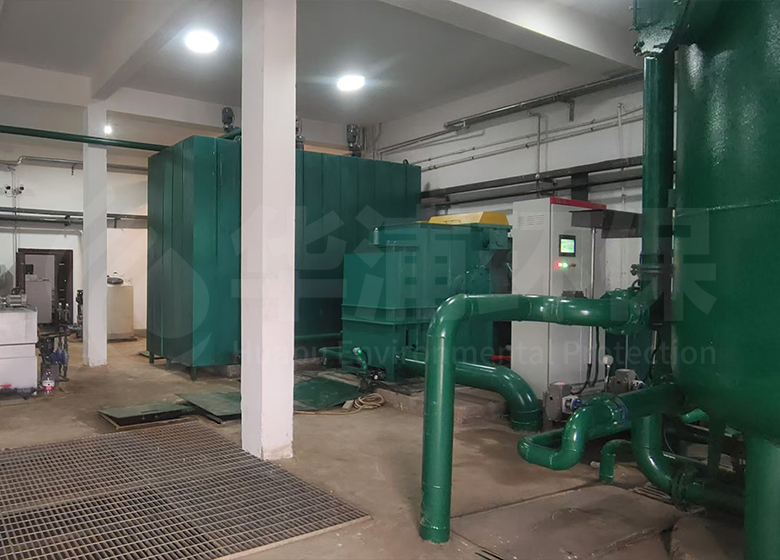
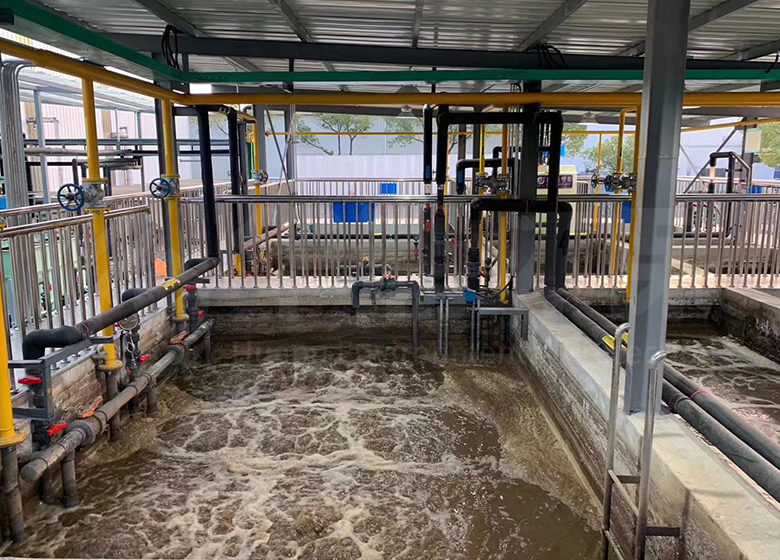
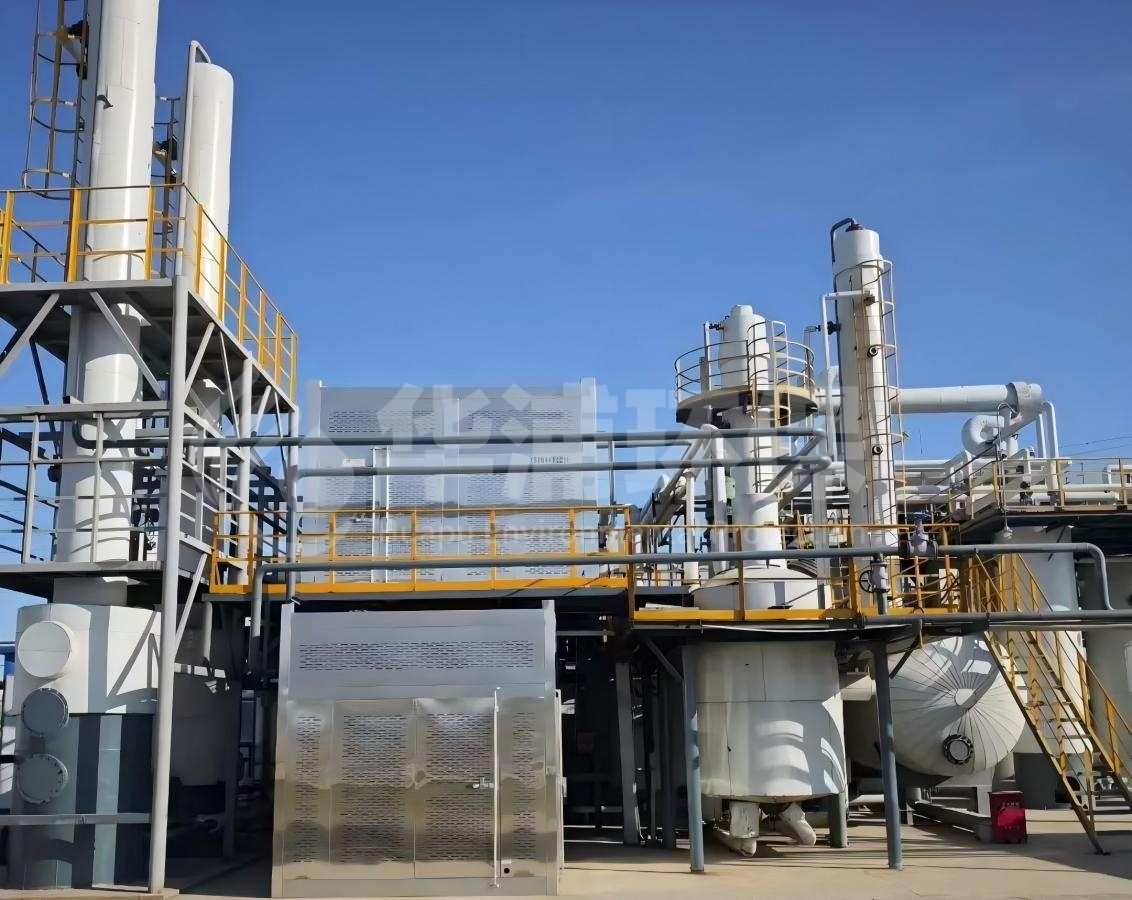
Organically coupling the operation of stripping and distillation units to achieve high ammonia nitrogen removal and resource recovery under low energy consumption conditions through dual effect energy-saving technology. The device mainly consists of a first stage stripping distillation tower, a second stage stripping distillation tower, a first stage tower kettle liquid storage tank, a second stage tower kettle liquid storage tank, an energy-saving device, a tower top condenser, a material inlet and outlet heat exchanger, a tower top reflux tank, and a supporting pump valve system. The core working principle is to first adjust the pH of the wastewater to alkaline, converting ammonium ions into free ammonia. The wastewater is preheated by a heat exchanger and enters the first effect tower, where high-temperature steam is used for stripping and distillation to remove some ammonia; The effluent from the kettle of the first effect tower enters the second effect tower for further deamination. The ammonia containing steam at the top of the first effect tower serves as the heating source for the reboiler of the second effect tower, achieving graded and cascaded utilization of thermal energy; The ammonia containing steam extracted from the top of the tower can be condensed to obtain 10%~20% concentrated ammonia water or high concentration ammonia gas for recovery. The ammonia nitrogen in the effluent of the tower kettle can be stably reduced to below 15mg/L, meeting the national first-class emission standard. As the industrialization promotion unit of this technology, Pulang Membrane has successfully applied the dual effect energy-saving stripping and deamination technology to the field of high ammonia nitrogen wastewater deamination pretreatment. The device has achieved series, complete set, modular, and fully automated operation.
Process Selection
1. Selection based on influent ammonia nitrogen concentration: Standard PYQT device is selected for influent ammonia nitrogen concentration of 1000-5000mg/L; The enhanced PYQT device is selected for the influent ammonia nitrogen concentration of 5000-20000mg/L; If the influent ammonia nitrogen is greater than 20000mg/L, a deep recovery PYQT device can be selected, and a distillation system can be configured to obtain higher concentration ammonia water.
2. Selection based on processing scale: For small projects with processing capacity<10m ³/h, an integrated pry mounted PYQT device is selected, which can be transported and installed as a whole; For medium-sized projects with a processing capacity of 10-100m ³/h, modular combination devices are selected; Large projects with a processing capacity greater than 100m ³/h adopt a multi tower parallel design.
3. Select according to the effluent requirements: The effluent requirements should meet the Class A standard of the Comprehensive Wastewater Discharge Standard (ammonia nitrogen ≤ 15mg/L) and select the standard type; The effluent requires ammonia nitrogen to be ≤ 5mg/L, and a reinforced type should be selected to increase the depth of the ammonia removal unit; The effluent requires ammonia nitrogen to be ≤ 3mg/L, and the "dual effect stripping+fine filtration" combination process is selected.
4. Selection based on industry water quality characteristics: PYQT-S type equipment with acid removal pretreatment is selected for sulfur-containing and ammonia containing wastewater from coking and coal chemical industries; The PYQT-Z device with pre-treatment is selected for ammonia nitrogen wastewater containing complex organic compounds in pharmaceuticals and pesticides; The PYQT-L device with ultrafiltration pretreatment is selected for garbage leachate.




 CN
CN

 National Service Hotline:400-611-6861