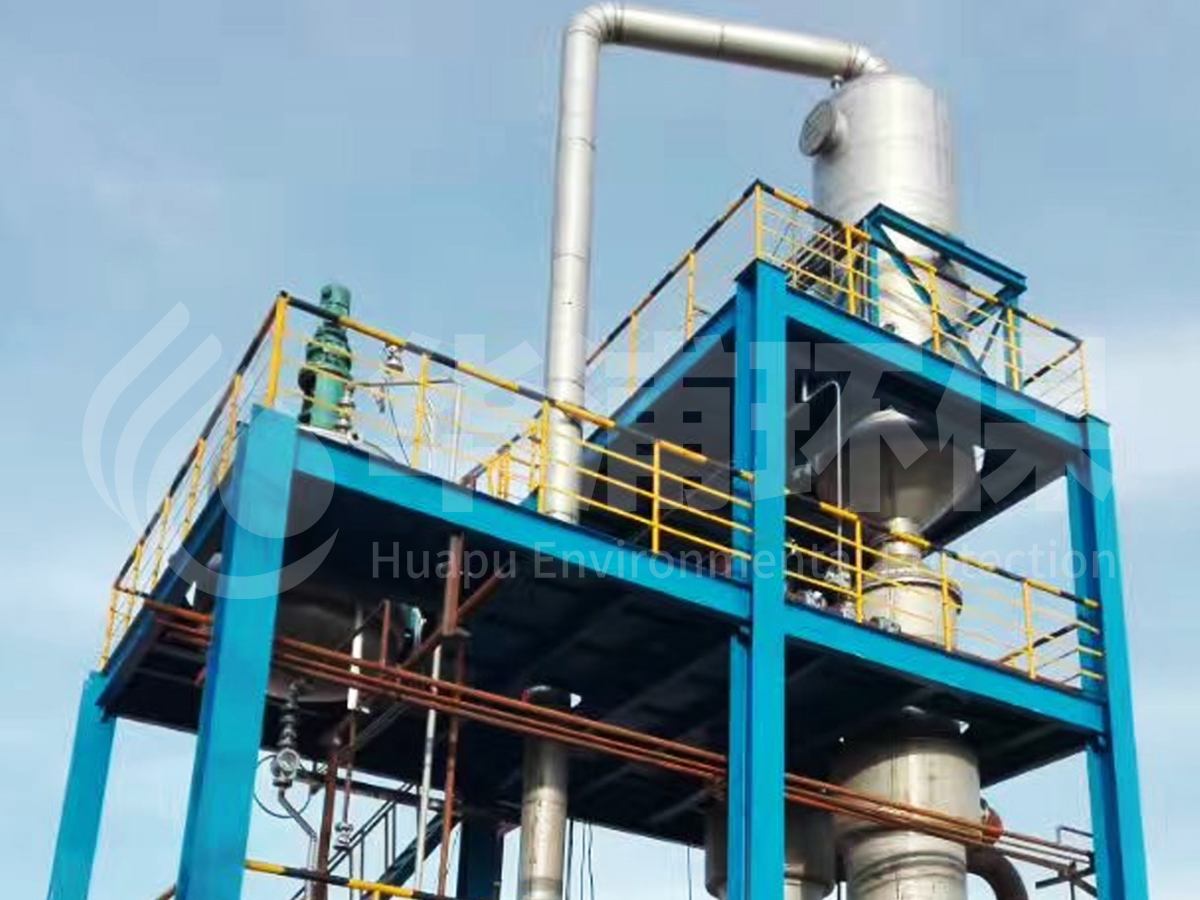
MVR Evaporation Crystallization Unit
By recovering latent heat from secondary vapor, this system enables closed-loop energy recycling. Compared to traditional multi-effect evaporation, it achieves over 50% energy savings and can operate without external live steam supply, making it a core technology for zero-liquid-discharge (ZLD) of high-salinity wastewater and resource recovery.
Applications:
Coal Chemical Industry – High-salinity wastewater treatment and resource recovery.
Lithium Battery & New Energy – Evaporation concentration and crystallization of lithium sulfate / lithium hydroxide in cathode material production and lithium-ion battery recycling.
Zero-Liquid-Discharge of High-Salinity Wastewater – Treatment of high-salinity effluents from chemical, textile, pharmaceutical, and electroplating industries, enabling clean water reuse and crystallized salt valorization.
Nonferrous Metallurgy – Treatment of raffinate, high-salt mother liquor, and waste acid, as well as evaporative salt splitting.
Biochemical / Food Industry – Low-temperature evaporation crystallization of heat-sensitive materials such as sodium gluconate and amino acids.




 CN
CN

 National Service Hotline:400-611-6861