Product Introduction
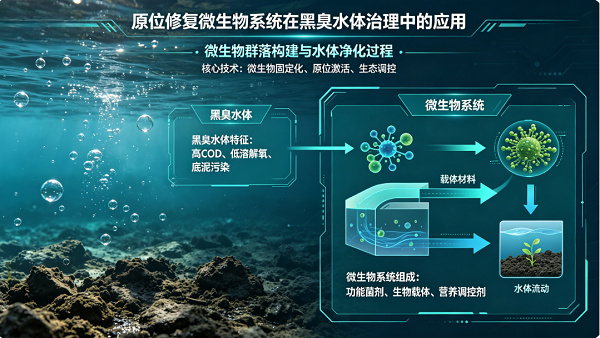
Bioaugmentation method: Directly adding screened and cultivated high-efficiency composite microbial agents (such as MDIS composite microorganisms, petroleum hydrocarbon degrading bacteria, etc.) to polluted environments (water bodies or soils).
Mechanism: Utilizing the growth and metabolic abilities of microorganisms to rapidly decompose pollutants (such as petroleum hydrocarbons, ammonia nitrogen, and organic chlorine); At the same time, by utilizing its ecological regulation ability, harmful bacteria can be suppressed through interspecific competition, accelerating the recovery of damaged ecosystems (such as rebuilding the food chain).
Biological stimulation method: By adding specific nutrients (carbon sources, trace elements, biological promoters) to the environment, a "PGPR selective activation platform" is constructed using nanotechnology or sustained-release technology.
Mechanism: This technology aims to selectively activate indigenous PGPR (rhizosphere growth promoting bacteria) in the environment, rather than introducing foreign bacterial species. By improving the living environment of microorganisms (providing nutrients, electron acceptors, or co metabolic substrates), indigenous microorganisms are encouraged to proliferate in large numbers, thereby enhancing their ability to decompose organic matter (such as reducing sludge by 40%) and convert nitrogen and phosphorus.
Process Selection
Core Applicable Scenarios of Process Categories Typical Process/Technical Points
In situ ecological restoration of flowing water bodies/large areas of lakes and reservoirs using water restoration technology: slow-release nutrient agents through ecological reaction tanks to activate indigenous PGPR, suitable for nitrogen and phosphorus exceeding standards and black and odorous treatment
Water remediation process for micro pollution/direct addition of microbial agents to enclosed water bodies: using shipborne equipment or fixed point addition of composite microbial agents (such as MDIS technology) to quickly construct the food chain
High concentration/low-permeability pollution coupling technology for soil/groundwater remediation process: combining electrodynamic migration and biodegradation to solve the problem of limited matrix mass transfer, suitable for organic chlorine pesticide contaminated sites
Soil/groundwater remediation technology: Microbial pile/injection well technology for deep/inconvenient excavation sites: Through high-pressure injection equipment or microbial pile systems, remediation agents are accurately delivered to the deep pollution plume
Strengthening the auxiliary process of immobilizing difficult degradation substances using microbial technology: using carriers (such as bamboo charcoal, calcium alginate) to protect microorganisms from competition and toxicity inhibition by indigenous bacteria, and improve degradation efficiency
Equipment Selection
Key parameters for equipment type, system composition, and principle selection
In situ injection equipment injects liquid remediation agents or microbial agents into deep soil layers through a high-pressure injection system; Often integrated into containers to achieve vehicle mounted mobile operations. Injection pressure: 0~12MPa (determines penetration) Injection flow rate: 0~1000L/h Injection accuracy: Control accuracy needs to reach about 0.5% to ensure accurate proportioning
The integrated device for bacterial cultivation and addition integrates sterile treatment of raw water, bacterial circulation cultivation (to meet dissolved oxygen requirements), and automatic addition system, which can fully utilize the nutrients in the raw water for expansion cultivation. Cultivation method: Equipped with a circulating mixing system, sterilization system: UV sterilization module (to prevent bacterial contamination), stability: buoyancy stability control system (to adapt to changes in water level)
The ecological reaction tank provides a semi enclosed environment, automatically sending external water into the tank to contact the ecological restoration agent (carrier), activating it and returning it to the water body, achieving "simultaneous circulation and activation". Carrier specific surface area: requires a large space for microbial attachment (such as 900 ㎡/m ³), slow-release performance: nutrient release cycle needs to be matched with hydraulic retention time
Mobile dosing equipment (shipborne) is suitable for large water surfaces in rivers and lakes. It uses the principle of Venturi to form negative pressure and automatically absorb microbial agents, which are mixed with water and sprayed. The structure is simple and does not require complex metering pumps. Mixing uniformity: Convenient design of Venturi tube structure: The equipment is placed as a whole on the ship, making it easy to move and operate on a large area




 CN
CN

 National Service Hotline:400-611-6861