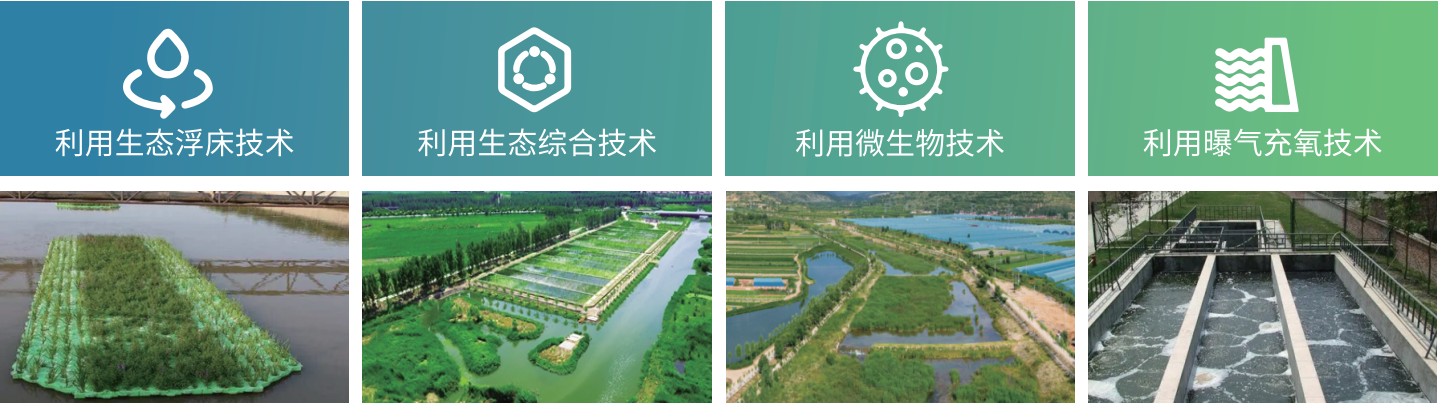
Although the conventional method of introducing clean water into the city has greatly improved the water quality of inland rivers and optimized the living environment of citizens, this method does not cure the problem, and can only temporarily improve the water quality of inland rivers. We should promote the ecological control of water pollution to achieve the recycling of water resources.
Landscape, black and odorous water treatment
Black and odorous water body treatment refers to a series of measures to diagnose the environmental problems of black and odorous water body, analyze the causes of black and odorous water body, verify the load of pollutants, determine the control objectives, and formulate the implementation scheme of black and odorous water body treatment, so as to eliminate the black and odorous phenomenon of water body.
Cause of generation
Pollution from non-point source: pollution load carried by precipitation, distributed livestock breeding wastewater pollution in rural-urban fringe area, etc.
Inherent pollution: bottom mud pollution, bio-polluting floating debris, suspended solids, bank garbage, uncleaned aquatic plants, aquatic algae, etc.
Point source pollution: direct discharge at the discharge outlet, overflow in rainy season of sewage and waste water flow system pipeline, initial rainwater or dry water in diversion system rainwater pipeline, water supplement from unconventional water sources, etc.
Other pollution: excessive tail water of urban sewage treatment plant, industrial enterprise accident discharge, fall leaves, etc.
Governance mode
Physical control: water conservancy projects such as sewage interception, water transfer and desilting, and technical means such as mechanical algae removal, water diversion and dilution, artificial flow making and river aeration.
Chemical treatment: chemical flocculation treatment technology, adding iron salt to promote phosphorus precipitation, adding limestone for denitrification, etc.
Bio-remediation treatment: plant restoration, animal restoration and microbial restoration can repair the water pollution by introducing plants, animals and microbes, among which the frequently introduced microbes include photosynthetic bacteria, actinomyces, yeast and lactic acid bacteria.




 CN
CN