Oilfield wastewater refers to the water extracted from oil wells along with crude oil during the oil extraction process, as well as various types of wastewater generated during subsequent treatment processes.
Wastewater characteristics: The composition is complex, containing crude oil, soluble gases, solid suspended matter, electrolytes, bacteria, and various oilfield chemical additives; it also has high mineralization, high oil content, high bacterial content, high scale ion content, and high suspended matter content.

Skid-mounted integrated oilfield produced water treatment unit
The skid-mounted integrated oilfield water treatment device is an oil-bearing water treatment equipment independently developed by our company, combining advanced technologies from both domestic and international sources. This device integrates technologies such as coagulation and sedimentation, oil-water separation, fine filtration, precision filtration, and sterilization, forming a multifunctional and integrated skid-mounted equipment for combined treatment. It is widely used in the treatment of oily wastewater, oilfield produced water, and oilfield reinjection water.
Oilfield reinjection water treatment unit
The oilfield reinjection water treatment device is developed based on the multifunctional oilfield sewage filter, incorporating air flotation and oil removal packing materials. An air cylinder is added outside the tank, combining the two-stage filter tank of the multifunctional oilfield sewage filter into a single-stage filter tank. The use of multiple filtering media replaces the original single type, and the filter and polarizer are integrated, significantly simplifying the sewage treatment process.
Oilfield fracturing flowback fluid treatment
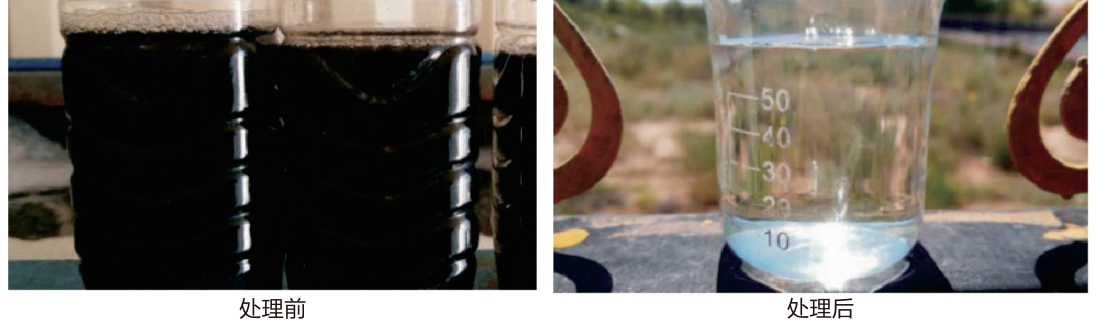
Fracturing is one of the main measures for increasing production in oil and gas wells, and it is widely adopted in various oil fields. The fracturing fluid system used in conventional fracturing operations is primarily water-based fracturing fluid. The main sources of fracturing waste fluid generated after fracturing operations are: on the one hand, the large amount of well-washing wastewater produced during and after the operation due to the use of activated water for well-washing; on the other hand, the fracturing gel-breaking fluid flowing back from the wellbore after the fracturing operation, as well as the remaining original gel fluid (base fluid). Different types of fracturing fluids form different types of fracturing flowback fluids. According to the molecular weight and the amount of polymers, there are mainly two types: gel fracturing fluid and slickwater.




 CN
CN

