Technical advantages of industrial wastewater recycling
① High-efficiency and energy conservation: significantly reduce the treatment cost by optimizing the process flow and adopting high-efficiency and energy conservation equipment;
② Resource conservation: zero discharge of wastewater, reduction of water consumption and environmental pollution;
③ Environment-friendly: comply with national and local environmental protection policies and promote green development and social responsibility of enterprises.
Technical advantages of municipal sewage recycling
① High-efficiency treatment: the combination of biological treatment and membrane technology improves the removal efficiency of pollutants, and the effluent quality is stable and reliable;
② Resource conservation: the consumption of natural water resources is reduced through recycling, and the production and treatment costs of sludge are reduced at the same time;
③ Environmental protection and low carbon: reducing environmental pollution and carbon emission, meeting the requirements of green, cyclic and low carbon development.
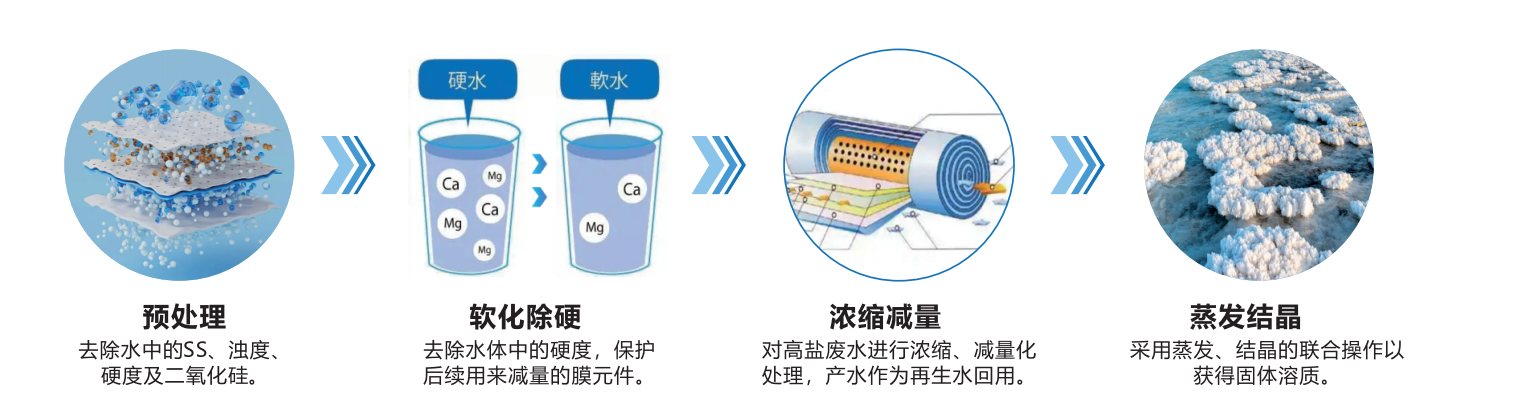
Technical advantages of high-salt wastewater recycling
① High-efficiency demineralization: remove salt in water, produce high-quality reclaimed water and realize recycling of water resources;
② Recycling: create economic benefits through recycling and reutilization of industrial salt;
③ High-efficiency process: optimize the process flow and use high-efficiency and energy-saving equipment to reduce the treatment cost;
④ Strong adaptability and flexibility: the process design meets different water quality conditions and discharge standards, and adapts to a variety of scenarios;
⑤ Modular design: the equipment adopts modular structure, with small floor area and easy installation and maintenance;
⑥ Sustainable benefits: improve resource utilization rate, reduce energy consumption and emission, and promote environmental green development.




 CN
CN